

 en | USD
 CHAT WITH GODLIKE TEAM




Minecraft Armor Trims: How to Get Every Smithing Template and Customize Your Armor
- 10 min read
- 6481 views
- 0 likes
TL;DR
Minecraft Server Hosting armor trims are cosmetic patterns you can apply to any armor piece using a smithing table. You need a smithing template (the trim pattern), the armor piece you want to change, and a trim material (the color). Armor trims do not change stats or durability, and you can overwrite a trim anytime by applying a different one. Most templates are chest loot, four of them come from trail ruins archaeology in suspicious gravel, and one comes from mob loot.

TIP
What are Minecraft armor trims, exactly?
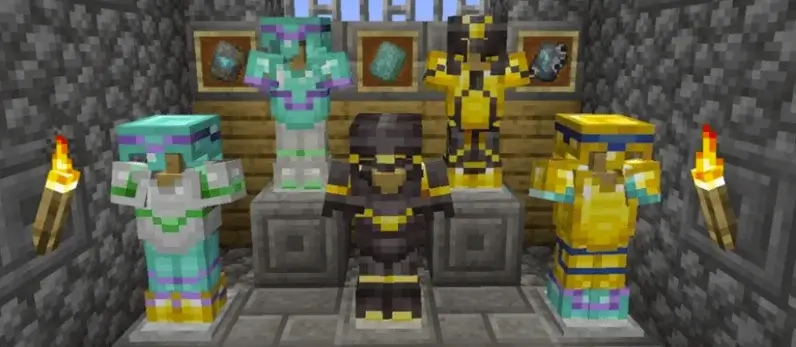
Minecraft armor trims are decorative designs that sit on top of your armor’s texture. Think of them like a badge that says where you’ve been exploring, not a buff that makes you tankier. Armor trims reflect your run’s story: desert temples, bastions, end cities, ancient cities, ocean monuments, and now trial chambers.
A few key points that save confusion right away:
- Armor trims are purely cosmetic. They do not affect stats.
- Armor trims do not affect durability.
- Armor trims can be applied to helmets, chestplates, leggings, and boots.
- Trims can be applied to all armor types including leather armor, iron armor, diamond armor, and netherite armor.
- You can overwrite an existing trim as many times as you want.
If you like the look, you keep it. If you change your mind, you swap it.
TIP
What you need to apply armor trims
To apply armor trims, you need four things:
A smithing table
A smithing template (this is the trim pattern)
An armor piece (helmet, chestplate, leggings, or boots)
A trim material (this is the color)
That’s it. No enchantments, no anvil, no weird trick.
NOTE
Because people mix them up: the netherite upgrade smithing template is not an armor trim template. It’s a different smithing template used to upgrade diamond armor into netherite gear. You can still put armor trims on netherite armor after you upgrade it, including a netherite helmet
How to apply armor trims on a smithing table
If you’ve used the smithing table for netherite gear, this will feel familiar.
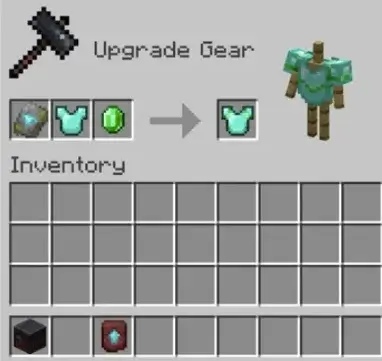
- Place the armor trim smithing template in the template slot.
- Place the armor piece in the gear slot.
- Place the trim material in the material slot.
- Take the result. Your armor piece’s appearance updates instantly.
That’s the whole process. You can apply armor trims to trimmed iron armor early game, then later redo the same look on diamond armor or netherite armor when you upgrade.
Armor trim colors and trim materials
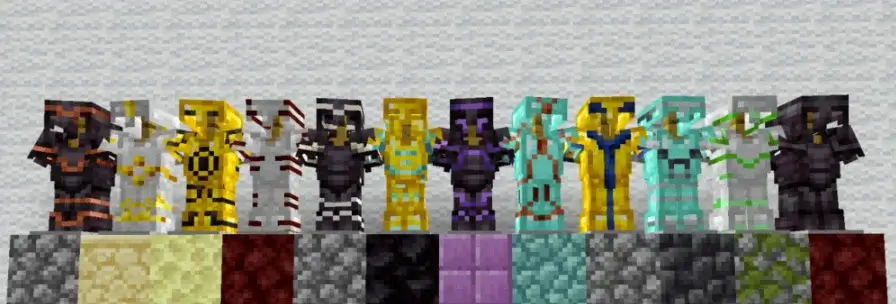
Armor trims use materials as dye, basically. The trim pattern stays the same, but the trim material changes the color. This is where armor trims get addictive.
Common trim material choices include:
- Iron
- Copper (yes, copper trims look great on darker sets)
- Gold
- Lapis
- Emerald
- Diamond
- Netherite
- Redstone (redstone trims pop on iron and netherite)
- Amethyst (amethyst armor trims give a purple shine that looks clean on dark sets)
- Quartz
The fun part is that you can keep the same template and just change the color. Wearing amethyst armor trims on dark armor feels like a “mage build” even though it’s purely style.
If you’re trimming leather armor, the contrast can be subtle depending on the leather color, so it’s worth testing a couple of trim material options before you commit.
TIP
Smithing templates: why you should duplicate them
Most players find their first smithing template, use it once, then realize it’s gone. That’s normal. Templates are not infinite.
Smithing templates can be duplicated by crafting them with seven diamonds and a corresponding material. The corresponding smithing template block depends on the template you’re duplicating, and the recipe shows the right block when you look it up. Some use normal blocks you can grab quickly. Others ask for a block tied to the structure theme.
TIP
If you find a rare template, duplicate it before you start trimming everything in your inventory
The 18 armor trim patterns and where to find them
There are 18 different armor trim templates available in Minecraft (as of the update set that includes trial chambers trims). Each trim pattern is tied to a specific location or loot source in Minecraft. In other words, if you want a specific look, you go to the structure that owns it.
Below is a clean where to look list. Most are chest loot. A few are archaeology. One is mob loot.
Quick list of armor trims by source
| Trim pattern (smithing template) | Where it comes from | Notes |
|---|---|---|
| Sentry armor trim | Pillager outpost chest loot | The classic outpost look. People call it sentry armor because it fits guard-style sets. |
| Dune armor trim | Desert temple (desert pyramid) chest loot | Desert run trim. Easy to farm if you can find temples fast. |
| Coast armor trim | Shipwreck chest loot | Great early if you’re exploring oceans anyway. |
| Wild armor trim | Jungle temples chest loot | Jungle temples are risky early. Worth it if you want the pattern. |
| Ward armor trim | Ancient city chest loot | Not the rarest there, but still a deep-dark mission. |
| Silence armor trim | Ancient city chest loot | The rarest trim for most players. Silence armor trim covers a bigger portion of the armor than most trims, so it stands out hard. |
| Rib armor trim | Nether fortress chest loot | Rib armor trim looks sharp on darker sets. Great reason to raid fortresses beyond blaze rods. |
| Snout armor trim | Bastion remnant chest loot | Snout armor trim resembles a piglin-inspired trim, which is exactly the vibe it’s going for. |
| Eye armor trim | Stronghold library chest loot | If you’re raiding a stronghold, check the library. Some players get distracted by the portal room and miss it. |
| Spire armor trim | End cities chest loot | End cities are the home of this one, so you’ll want elytra-level confidence. |
| Vex armor trim | Woodland mansion chest loot | This is the vex smithing template. Mansions are rare, but the trim is iconic. |
| Tide armor trim | Elder guardian mob loot | Elder guardians have a 20% chance to drop the tide armor trim when killed. Ocean monuments finally pay out in style. |
| Host armor trim | Trail ruins suspicious gravel | Archaeology trim. Brush suspicious gravel. This is one of the dig for it templates. |
| Raiser armor trim | Trail ruins suspicious gravel | Another archaeology template. Trail ruins can feel slow, but the trims are worth it. |
| Shaper armor trim | Trail ruins suspicious gravel | Shaper armor trim is also from trail ruins. You’ll see it mentioned as shaper armor sometimes. |
| Wayfinder armor trim | Trail ruins suspicious gravel | Wayfinder armor trim is the last of the four trail ruins templates. |
| Flow armor trim | Trial chambers chest loot / vault rewards | Trial chambers trims are newer, so they’re great if you want something not everyone wears. |
| Bolt armor trim | Trial chambers chest loot / vault rewards | Bolt armor trims are part of the same set. Check rooms with extra loot spots, including places people nickname the tree chopper room, plus side areas with altar chests. |
A couple of clarifiers that help when you’re hunting:
- The trail ruins trims come from archaeology loot. That means suspicious gravel is the key. You are rolling archaeological loot tables, not normal dungeon chests.
- Many trims are only chests. You won’t craft the templates. You have to find them as rare loot or random loot inside structures.
- The tide armor trim is the exception because it’s mob loot.
Also, about strongholds: some layouts have dead-end rooms that feel like a fake end portal room at first glance. Don’t let that waste your time. The Eye template is tied to stronghold library chest loot.
A simple get the most trims fast route
If you want trimmed armor early without turning this into a 30-hour scavenger hunt, run it like this:
Shipwreck + desert temple: Coast armor trim and dune armor trim are quick wins.
Pillager outpost: grab the sentry armor trim while you’re still in overworld travel mode.
Nether trip: rib armor trim (fortress) and snout armor trim (bastion).
End cities: spire armor trim, plus end city loot in general.
Deep dive options: ancient city for ward armor trim and silence armor trim.
Ocean monument: tide armor trim if you want the flex.
Trail ruins: host armor trim, raiser armor trim, shaper armor trim, wayfinder armor trim. Bring patience and brushes.
Trial chambers: bolt armor trims and the Flow template if you want the newer patterns.
That path gets you variety without forcing the hardest locations first.
What armor type looks best with trims?
This part is personal, but there are a few combos that just work:
- Trimmed iron armor looks great because iron is neutral and makes most trim materials pop.
- Diamond armor can look loud with bright trim material. Redstone trims and copper trims can balance it out.
- Netherite armor is the king of contrast. Amethyst armor trims and quartz trims both look clean.
- Trim leather armor is underrated for roleplay and early survival looks, especially if you’re matching a base theme.
If you’re wearing trimmed armor in multiplayer, people notice the pattern before they notice your enchantments. That’s the point.
FAQ
Do armor trims change stats?
No. Applying armor trims does not affect the stats or durability of the armor.
Can I remove a trim?
You don’t remove it, you overwrite it. Players can overwrite an existing armor trim by applying a new one to the same armor piece.
What is the rarest trim?
For most players, the silence armor trim is the rarest trim because it comes from ancient city chest loot with a very low chance.
Can you apply armor trims to netherite armor?
Yes. Trims can be applied to netherite armor the same way as iron armor or diamond armor.
How armor trims work with color
The template is the pattern. The trim material is the color. Swap the trim material and you get a different look with the same pattern textures.

Read Next
-
Best Minecraft Server Hosting 2026 – 12 Compared & Ranked Providers
Important Note: Godlike.host is our own service. This ranking is editorial (not paid placement) and follows the scoring criteria shown below. Always verify current plan limits, pricing, and regions on each provider’s website before purchasing….
-
Minecraft 1.21+ Seeds Worth Trying (Cherry Villages, Dungeons, and Beauty)
TL;DR If you want one seed that feels like a complete starter world, pick Cherry Valley Trio (Seed: 608548899648438462) for villages, deep structures, and a strong exploration route.If you want a dramatic build location with…
-
What Y Level is Best for Diamonds in Minecraft (1.20 -1.21)
Ultimate Minecraft Diamonds Mining Guide Why are diamonds so wanted by many? Minecraft Diamonds – shiny blue gems in the world of Minecraft that also happen to be the ore required to have the best…