Host a Minecraft Java Edition server if you want plugins, modpacks, deeper control, and more freedom to customize how the server runs. Host a Minecraft Bedrock Edition server if your main priority is getting Bedrock players on consoles, tablets, and other mobile devices into the same world with less friction. If you want Java’s server ecosystem but still need Bedrock access, a Java server with Geyser is the usual middle ground, but it is still a bridge setup rather than native full crossplay.
Choose Minecraft Java Edition if you want the strongest plugin and mod ecosystem, more version control, and deeper server-side customization. Choose Minecraft Bedrock Edition if you want easier access for friends across consoles, phones, tablets, and Windows devices. Choose Java plus Geyser if you want Java flexibility but still want Bedrock players to connect.
The Short Answer
For most serious server owners, Java is the stronger hosting choice. Paper is a Java Edition server built around better performance and a richer API, and Java also sits on top of the wider plugin and mod ecosystem that most public servers, SMP communities, and custom gameplay projects still rely on. Bedrock is easier to recommend when your players are spread across phones, consoles, tablets, and Windows devices and you care more about smooth joining than deep server-side flexibility.
That split becomes obvious in real use. A modded survival world, a plugin-heavy community server, or anything built around custom rules usually points toward Java. A casual private server where one friend is on Xbox, another is on mobile, and somebody else is on PC usually points toward Bedrock. And if your group is mostly PC but you still want Bedrock access, Geyser exists specifically to let Bedrock clients join Java servers.
What Actually Changes When You Host Java vs Bedrock
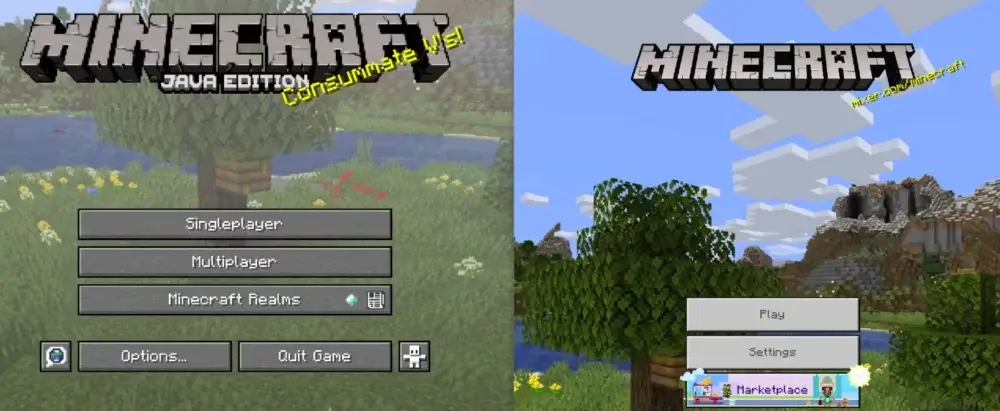
The first real difference is who can join. Minecraft’s official edition guide says Java runs on Windows, Mac, and Linux, while Bedrock runs across Windows, consoles, mobile, and other Bedrock-supported devices. That alone changes the kind of server you are building. A Java server starts from a PC-first audience. A Bedrock server starts from a cross-device audience.
At the simplest level, Minecraft Java Edition and Minecraft Bedrock Edition are not just two labels for the same server. They lead to different player expectations, different hosting workflows, and different limits on what you can change later.
The second difference is the server ecosystem itself. Both editions have official dedicated server software, but they do not lead to the same hosting workflow. Java quickly branches into Paper, plugin stacks, proxies, mod loaders, and more advanced admin tooling. Bedrock stays closer to its own official path, with add-ons, Marketplace content, and simpler device compatibility as the main selling points.
There is also a quieter difference that matters more than people expect: version freedom. Mojang’s own edition guide says Java players can choose from older release versions in the launcher, while Bedrock players are generally limited to the latest stable release or preview/beta builds. For hosting, that matters when a plugin stack, a modpack, or a community world needs to stay on a specific version for a while.
Which One Is Easier for Players to Join
Bedrock usually wins on convenience. If your group includes console and mobile players, Bedrock is the straightforward answer because those devices already live inside the Bedrock ecosystem. That means less explaining, fewer client-side steps, and less chance that someone gives up before they even reach spawn.
Java is easier only when your audience is already aligned around PC. For a PC-first friend group or a community that expects plugins, resource packs, custom rules, or mod loaders, Java is often the smoother experience because the whole server setup is being built for that kind of player from the start. It is not the broader choice, but it is often the better fit. For the average Minecraft player, ease of joining usually matters more than edition loyalty, especially when the server is meant for a mixed group rather than a technical community.
A simple real-world example: if you are starting a small server for siblings or friends who play on Switch, Xbox, and phone, Bedrock saves you a lot of friction. If everybody is on desktop and somebody is already asking for proximity chat, economy plugins, or a Fabric modpack, Bedrock stops looking convenient very quickly.
Mods, Plugins, Add-Ons, and Server Flexibility
This is where Java usually pulls ahead for hosting. Paper’s documentation is blunt about what it is: a Java Edition game server designed for stronger performance and a more advanced API, with docs for administration and plugin development. That is the foundation most server owners actually mean when they talk about plugin-heavy Minecraft hosting.
Bedrock has a different content path. Minecraft Help says Bedrock add-ons can add custom blocks, items, mobs, recipes, and other content to new or existing worlds, and they work in single-player and multiplayer worlds. Minecraft’s own add-ons page also says they work across Bedrock platforms and with Realms. That makes Bedrock more flexible than some older Java-vs-Bedrock articles suggest, but it is still a different ecosystem from Java’s broader plugin and mod scene.
That difference matters most once the server stops being “just a place to hang out.” If you want to run Paper plugins, a heavily tuned SMP, or full modpacks through Fabric, Forge, or NeoForge, Java is usually the obvious call. If you mostly want an easier multiplayer server with lighter customization and better device reach, Bedrock stays attractive.
Performance and Hosting Differences That Actually Matter
Raw performance is not really the right question here. The better question is what kind of maintenance burden you want. Java gives you more control, but it also gives you more responsibility: choosing server software, matching plugin versions, handling loaders, and deciding when to upgrade. Bedrock is usually simpler to keep aligned, but you trade away some flexibility in return.
That is why “which one performs better?” is usually less useful than “which one is easier to operate well?” A lightweight Bedrock server for a mixed-device friend group may be the cleanest answer even if a power user prefers Java. A Java Paper server may be the smarter answer for a community world because the moderation tools, plugin ecosystem, and future upgrade options are stronger.
Java vs Bedrock for Friends Servers
For a private server, Minecraft Bedrock Edition is usually the easier starting point when your group includes Bedrock players on consoles, tablets, and other mobile devices. It lowers the barrier to joining and makes it easier to get as many friends as possible into the same world without extra setup.
Minecraft Java Edition becomes the better choice when the group is mostly PC-based and already wants plugins, modpacks, or deeper control over versions and server tools. If you care about long-term flexibility, custom uploads, or even unlimited slots on normal hosting plans, Java usually gives you more room to grow than a simple friends-only setup.
Java vs Bedrock for Public or Community Servers
Once you are building something more public, Java usually has the edge. Mojang’s own edition guide says Java can access a wider variety of third-party servers, while Paper is explicitly built for the Java server ecosystem and plugin expansion. That combination is a big reason most serious SMPs, public servers, minigame networks, and community-heavy setups still lean Java first.
Bedrock can still make sense for community projects where accessibility matters more than depth. If your goal is a broad, casual audience that includes console and mobile players, Bedrock removes the biggest barrier immediately: joining the server without changing ecosystems. That trade-off is real. Java gives you more room. Bedrock gives you more reach.
Can Java and Bedrock Players Join the Same Server?
Not by default. Minecraft’s official edition guide says Java and Bedrock players cannot play together because the two editions use different servers. That is the clean official answer.
The common workaround is Geyser. Geyser’s own site describes it as a translator that sits between the Bedrock client and the Java server, letting Bedrock Edition clients join Java Edition servers. It can run as a plugin or standalone program, and Floodgate can simplify joining for Bedrock users. That makes Java-plus-Geyser a very practical hosting path when you want Java’s server ecosystem without shutting Bedrock players out completely. That is why this setup works best when you want Java-side control first and broader access second, not when you want the cleanest possible native experience for every platform.
It is still worth treating that as a bridge, not a perfect merger. If what you want most is dead-simple cross-device joining, Bedrock is cleaner. If what you want most is Java hosting with broader access, Geyser is the compromise that usually makes the most sense.
Once you know which path fits your players, the hosting decision gets much easier. A Java server usually needs clean support for different server jars, plugins, mod loaders, version changes, and custom uploads. A Bedrock server needs a panel and workflow that keep setup simple, especially when the goal is just getting friends online fast without turning every change into admin work.
That is where Minecraft server hosting stops being interchangeable. A Java server usually needs clean support for plugins, mod loaders, custom uploads, and version changes, while a Bedrock server benefits more from easy setup and low-friction management. This is also where a host like Godlike makes more sense than a generic server box: it gives you a cleaner path for setup, backups, scaling, and support, whether you are starting with a small friends world or planning to grow into something bigger later.
If you already know you want plugins, modpacks, or a server that can grow with your community, this is the point where choosing the right hosting platform matters more than arguing about editions in the abstract.
Conclusion
Host Minecraft Java Edition if your server needs plugins, modpacks, deeper control, and room to evolve over time. Host Minecraft Bedrock Edition if your priority is easier access for Bedrock players, consoles, and mobile devices. And if you want Java flexibility without fully shutting Bedrock players out, Java plus Geyser is the practical middle option. The best server to host is not the one that wins a general edition debate. It is the one that fits your players, your plans, and the amount of setup work you actually want to manage.
FAQ
Is Java or Bedrock better for a Minecraft server?
Neither is better in every situation. Java is usually better for plugins, mods, Paper, and deeper control. Bedrock is usually better for cross-device access and lower friction for players on console or mobile.
Is Bedrock better for playing with friends?
Usually, yes, when those friends are on different devices. Bedrock runs across consoles, mobile, and Windows, so it is often the easier option for mixed-device groups.
Is Java better for plugins and modpacks?
Yes. Paper is a Java Edition server with an advanced API and plugin ecosystem, and Java is still the natural home for the deeper mod/plugin route most custom servers use.
Can Bedrock players join a Java server?
Not natively. By default, Java and Bedrock players cannot play together, but Geyser can bridge Bedrock clients onto Java servers.
Is Bedrock easier to host than Java?
It is often easier to get running for casual groups, but “easier” depends on your goal. Bedrock is simpler for device access. Java is stronger when you need flexibility, plugins, server software choice, and long-term customization.
Should I use Realms or normal server hosting?
Realms is fine if you want the easiest official private-server option for a small group. If you want more than 10 players, deeper server control, plugin or mod support, version flexibility, or a more serious community setup, normal hosting is usually the better fit.
Itskovich Spartak
Game Content Writer
A dedicated Game Content Writer who creates clear engaging articles and guides for gamers. Experienced in explaining game mechanics, server features and community topics in a way that feels accessible and enjoyable to read. Focuses on delivering content that helps players make decisions, discover new possibilities and get more from their favorite games. Combines a reader friendly style with a strong understanding of what interests modern gaming communities.
Important Note: Godlike.host is our own service. This ranking is editorial (not paid placement) and follows the scoring criteria shown below. Always verify current plan limits, pricing, and regions on each provider’s website before purchasing….
TL;DR If you want one seed that feels like a complete starter world, pick Cherry Valley Trio (Seed: 608548899648438462) for villages, deep structures, and a strong exploration route.If you want a dramatic build location with…
Ultimate Minecraft Diamonds Mining Guide Why are diamonds so wanted by many? Minecraft Diamonds – shiny blue gems in the world of Minecraft that also happen to be the ore required to have the best…



 en | USD
 CHAT WITH GODLIKE TEAM