

 en | USD
 CHAT WITH GODLIKE TEAM



What Does Smite Do in Minecraft?
- 10 min read
- 70 views
- 0 likes
TL;DR
In Minecraft Server Hosting Smite is a specialist weapon enchantment for fighting undead mobs. Put it on a sword or axe and it adds extra melee damage to targets like zombies, skeletons, drowned, wither skeletons, phantoms, and the Wither itself. It shines in places like Nether Fortresses, ocean ruins, undead farms, and Wither prep. It is not a great everyday enchant, and it does nothing extra in PvP. In Minecraft, Smite is best treated as a specialist melee enchantment rather than a one-weapon answer for every fight.

What Smite actually does
At its core, Smite trades flexibility for raw matchup value. Instead of giving you a small boost against everything, it gives you a much bigger boost against mobs the game classifies as undead. That includes the usual suspects like zombies and skeletons, but also variants and boss-level targets such as drowned, husks, strays, zombified piglins, phantoms, wither skeletons, zoglins, and the Wither. Newer undead variants like the bogged also fall into that bucket, which is the kind of detail older guides often miss.
What it does not do matters just as much. Smite enchantment gives no extra help against players, creepers, Endermen, blazes, or most other non-undead enemies. So if your goal is one weapon for cave runs, surface nights, bosses, and random overworld fights, Smite is usually the wrong pick as your main carry. Also worth clearing up: if you remember reading that Smite once worked on the Warden, that was tied to testing snapshots and was later removed, so it is not something you should plan around in a live survival world.
How much extra damage Smite adds
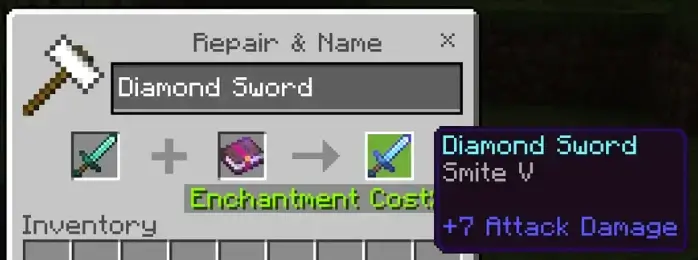
The simple version is this: Smite I adds 2.5 extra damage to undead, Smite II adds 5, Smite III adds 7.5, Smite IV adds 10, and Smite V adds 12.5. That is why the enchant feels so dramatic in actual play. It is not a tiny edge. Once you move into Smite IV and V territory, a lot of common undead fights become much shorter, and some of them turn into one-hit or near-one-hit situations depending on your weapon and attack timing.
There is one caveat here. Exact hit thresholds are version-sensitive. Current community references and newer guides do note that Bedrock can land a little differently than Java on precise damage math, so if you are optimizing for a farm, a skull run, or a specific one-shot setup, it is smarter to test on your edition than to copy a Java damage chart blindly. That small note can save you a lot of confusion if your Bedrock weapon feels slightly weaker than the numbers you saw in a guide. If you are wondering how much damage that really means in practice, it depends on the weapon, the Smite level, and whether you are playing Java Edition or Bedrock Edition.
Smite Breakpoints and Best Undead Targets
One practical detail many guides skip is the breakpoint math. In Java Edition, a fully charged Smite V iron sword reaches 18.5 damage and a diamond sword reaches 19.5 against undead, so standard 20-health targets like zombies, skeletons, and wither skeletons usually survive with a sliver unless you land a crit. A netherite sword crosses that line at 20.5, and Smite V stone, iron, diamond, and netherite axes all clear it on a full hit, which is why axes feel so strong on undead-focused runs. Bedrock uses different damage values, so the exact one-hit breakpoints shift there. In practice, that makes Smite most valuable against high-value undead targets such as wither skeletons, drowned, and the Wither, not just random overworld zombies.
When Smite is better than Sharpness
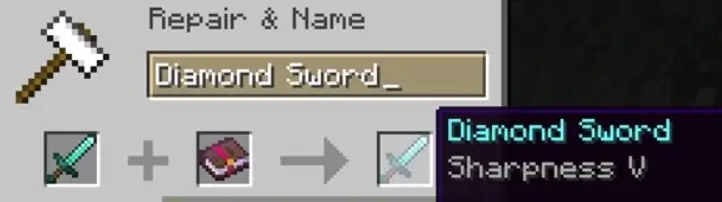
Smite enchantment beats Sharpness when most of what you expect to fight is undead. Sharpness beats Smite when your targets are mixed. That is really the decision. Sharpness is the everyday weapon enchant. Smite is the specialist you pack on purpose. Minecraft’s own community guides frame it the same way: Sharpness for general use, Smite for undead-heavy jobs.
Picture a Nether Fortress run where you are farming wither skeleton skulls. Every extra swing you do not need is time saved and damage avoided, especially when skeletons, wither skeletons, and other fortress pressure start overlapping. That is where Smite stops being “niche” and starts feeling like the correct tool. The same logic applies underwater. If you are raiding ocean ruins or hunting drowned for tridents, Smite is much more useful than a generic enchant because the main threat is already in its target lane.
The Wither is the other major reason many experienced players keep a dedicated Smite weapon around. The boss is explicitly undead, so Smite works on it. On Java, the Wither also gains anti-projectile armor after it drops below half health, which is exactly the sort of mechanic that makes a melee weapon choice matter more than people expect. A Smite weapon is not just nice there. It is one of the cleanest ways to push that fight faster once arrows stop carrying the job.
One more expert note here because it matters: Smite does not increase loot drops. Looting does. If you are farming wither skeleton skulls or cleaning out drowned for drops, the strong combo is Smite for faster kills plus Looting for better loot odds. That distinction gets blurred in a lot of low-quality content, but the game treats those as separate jobs.
IMPORTANT
Where Smite Actually Gives You an Edge
Smite enchantment really pays off when an area is packed with undead. That is why it feels so good in places like Nether Fortress skull runs, drowned routes, or a Wither setup. The affected mobs in those situations are exactly the targets Smite is built for: zombies, skeletons, drowned, wither skeletons, and the Wither boss. Older guides may still mention zombie pigmen, but the current name is zombified piglins. Since Smite increases damage only against undead, it cuts down the number of hits where that bonus actually matters, which makes farming wither skeletons faster and safer. Against regular enemies, the weapon behaves normally, so most players still keep Sharpness on a separate weapon for everyday combat.
Sword or axe?
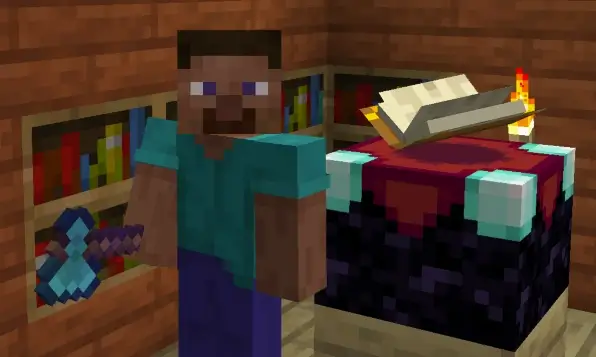
For Java players, swords and axes fill slightly different roles even before Smite enchantment enters the picture. Swords swing faster and can do sweeping attacks, which makes them better when mobs pile up. Axes hit harder per swing, but recover more slowly. In plain language, a Smite sword feels smoother for repeated fights and crowd cleanup, while a Smite axe feels best when you are landing deliberate charged hits into a single undead target.
A practical setup that makes a lot of sense is this: keep Sharpness on your everyday sword, then keep a second weapon with Smite for undead-heavy trips. Some players like the Smite weapon to be an axe because the hit feels heavier. Others prefer another sword because it keeps combat rhythm consistent. Either approach works. The important part is not forcing Smite to be your only melee enchant.
Best Early and Mid-Game Smite Weapons
You do not need expensive gear for Smite enchantment to be worth using. A stone sword is enough to make early undead fights easier, and an iron sword already feels reliable for dungeons, village defense, and basic fortress routes. If you prefer heavier hits, an iron axe or diamond axe can be the better fit. Minecraft combat is attack based, so a fully charged axe swing often feels better than rushing weak hits. Swords are still the smoother option when fights get crowded, but axes are great when you want stronger single-hit pressure on undead mobs.
How to get Smite without wasting time
You can roll Smite from an enchanting table, get it from enchanted books, find it in loot, catch it through fishing, or buy it from librarian villagers as an enchanted book. If your goal is “I want Smite on demand,” books and villager trades are the most controlled path. If your goal is “I just want a decent undead weapon now,” a table can get you there faster.
Bookshelves help, but there is a nuance people often skip. Fifteen bookshelves around the enchanting table unlock the full level-30 range, which improves your access to higher-tier enchantments, but it does not guarantee Smite V. It only improves the ceiling. Smite’s enchantment level ranges still sit inside the game’s random roll system, so sometimes the table simply will not offer what you want yet.
If you already added Smite to the wrong weapon, a grindstone lets you reset the item and try for a new enchantment path.
That leads to one of the best practical tricks for beginners: reroll the table instead of staring at bad options. Minecraft’s enchantment system refreshes its offered set when you complete another enchant, so if Smite is not showing up, spend a cheap enchant on a throwaway book or low-value item and check again. That little habit saves levels, saves time, and feels much less frustrating than waiting for the “perfect” menu to appear on its own.
Common mistakes people make with Smite
The most common mistake is using Smite enchantment like it is a universal damage upgrade. It is not. In a skeleton spawner or zombie farm, a Smite weapon feels excellent. As soon as the fight shifts to a creeper, Enderman, or another non-undead target, that extra value disappears. Players also run into trouble when they try to put Smite and Sharpness on the same weapon. In normal survival, those enchantments are mutually exclusive, along with Bane of Arthropods. An anvil can move an enchanted book onto a weapon, but it still will not let you stack both damage perks on one item. And if you put Smite on the wrong weapon, a grindstone gives you a clean reset.
Smite alt+tab cheat sheet
- Best for: wither skeleton farming, the Wither fight, drowned hunting, undead-heavy farms
- Weak for: PvP, mixed-mob cave runs, general-purpose roaming
- Best mindset: keep Smite as a second weapon, not your only weapon
- Best partner enchant for farming: Looting, because Smite speeds kills but does not raise drop rates
- Best table setup: 15 bookshelves, then reroll bad offers with cheap enchants when needed
Conclusion
Smite in Minecraft is not the best all-purpose enchantment, but it is one of the best specialist tools you can carry. When you know you are heading into undead-heavy fights like Nether Fortress runs, drowned farming, or the Wither boss, a Smite weapon can save hits and make combat much more efficient. It does nothing extra against regular enemies, which is why most players are better off treating Smite as a second weapon rather than their main one. Used that way, it stops feeling niche and starts feeling genuinely smart.
FAQ
-
Is Smite better than Sharpness in Minecraft?
Against undead, yes. For general use, no. Sharpness is the better all-rounder, while Smite is the better specialist. That is why many players end up carrying both instead of trying to force one enchant to do every job. -
Does Smite work on the Wither?
Yes. The Wither is an undead boss, so Smite affects it. That is one of the main reasons Smite stays relevant even in late-game worlds. -
Should You Carry Both Sharpness and Smite in Minecraft?
If you already have solid gear, yes. Sharpness is still the better main weapon for general combat, but a second Smite weapon is worth carrying for Nether Fortresses, drowned routes, undead farms, and the Wither fight. Since Smite cannot be combined with Sharpness and only boosts damage against undead, the most practical setup is a general-purpose Sharpness weapon plus a dedicated Smite sword or axe for undead-heavy content. -
Can you put Smite on an axe?
Yes. Current reference material and live guides list Smite as usable on swords and axes for normal survival play, which is why a dedicated Smite axe is such a common setup for undead-heavy content. -
How do you remove Smite from a weapon?
Use a grindstone. It removes enchantments from the item, except curses, and gives some experience back. That is the cleanest fix if you change your mind or want to reroll into a different combat enchant.

Read Next
-
Best Minecraft Server Hosting 2026 – 12 Compared & Ranked Providers
Important Note: Godlike.host is our own service. This ranking is editorial (not paid placement) and follows the scoring criteria shown below. Always verify current plan limits, pricing, and regions on each provider’s website before purchasing….
-
Minecraft 1.21+ Seeds Worth Trying (Cherry Villages, Dungeons, and Beauty)
TL;DR If you want one seed that feels like a complete starter world, pick Cherry Valley Trio (Seed: 608548899648438462) for villages, deep structures, and a strong exploration route.If you want a dramatic build location with…
-
What Y Level is Best for Diamonds in Minecraft (1.20 -1.21)
Ultimate Minecraft Diamonds Mining Guide Why are diamonds so wanted by many? Minecraft Diamonds – shiny blue gems in the world of Minecraft that also happen to be the ore required to have the best…