Minecraft update 1.15 “Buzzy Bees”, like you might’ve guessed, added bees, bee farming, honeycombs, honey and such. A few other updates later had plenty of new items that use those honeycombs and honey in their crafts. Considering those are used is a variety of crafts, which makes them a desirable resources to have in a later stages of the game.

Make your own FREE minecraft server
MINECRAFT FREE SERVER
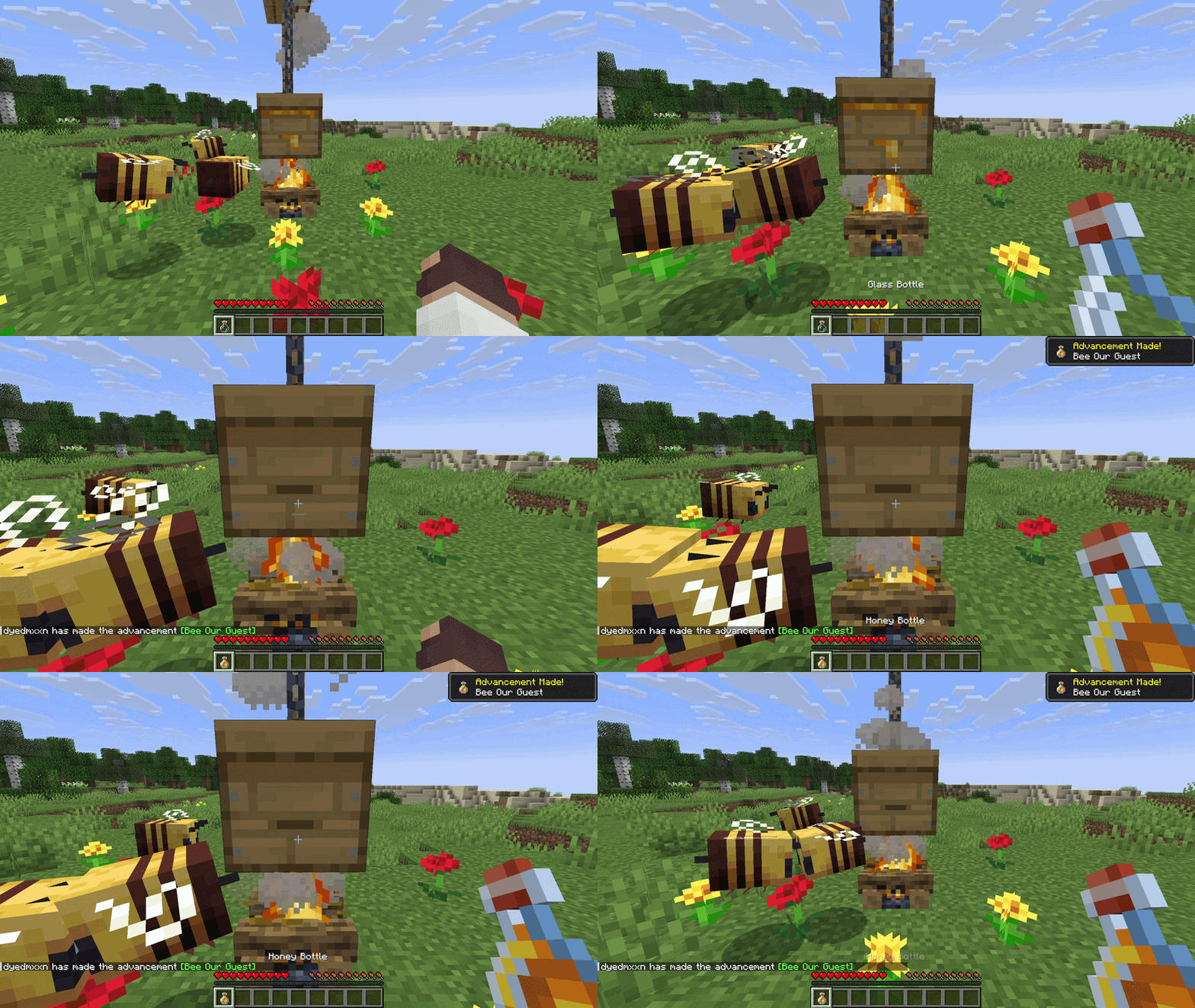
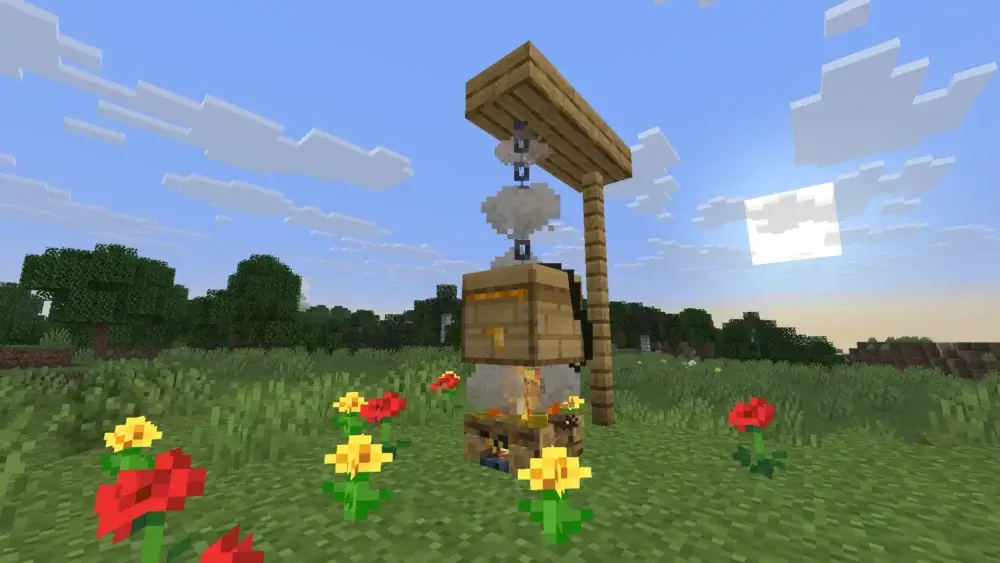
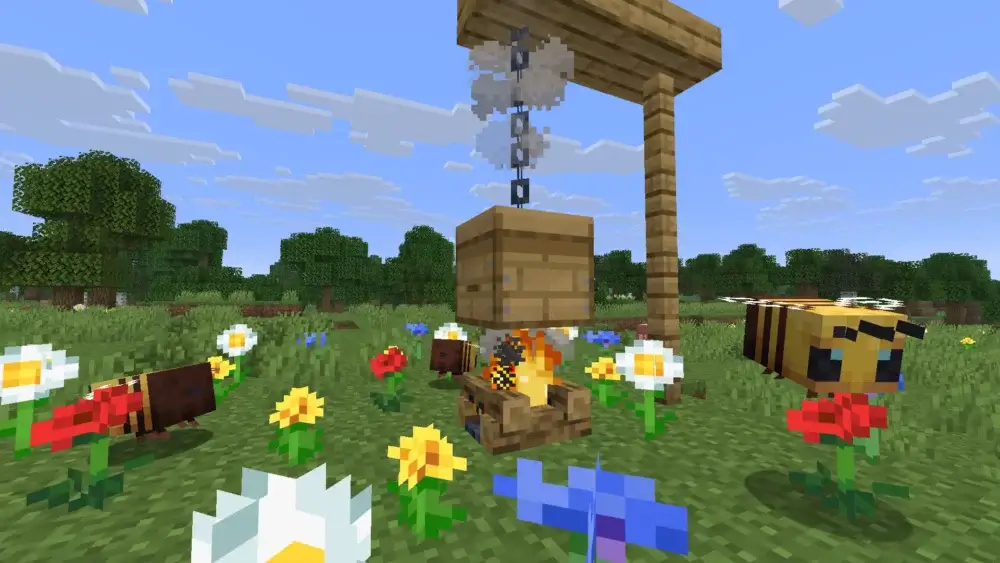
Cutting to the chase, to get honeycombs and honey, you need to find bee nest or a bee hive full of honey (which is easily visible on the texture of the block), place a campfire directly underneath it(make sure the it is lit), and use either shears to get honey combs or empty glass to get honey by right clicking the nest / hive.
Although this cover the basics of how to get this resources, there are a lot more to this topic then you might originally think. So let’s dive deeper into the buzzing world of bee farming!
Where to find bees and bee nests
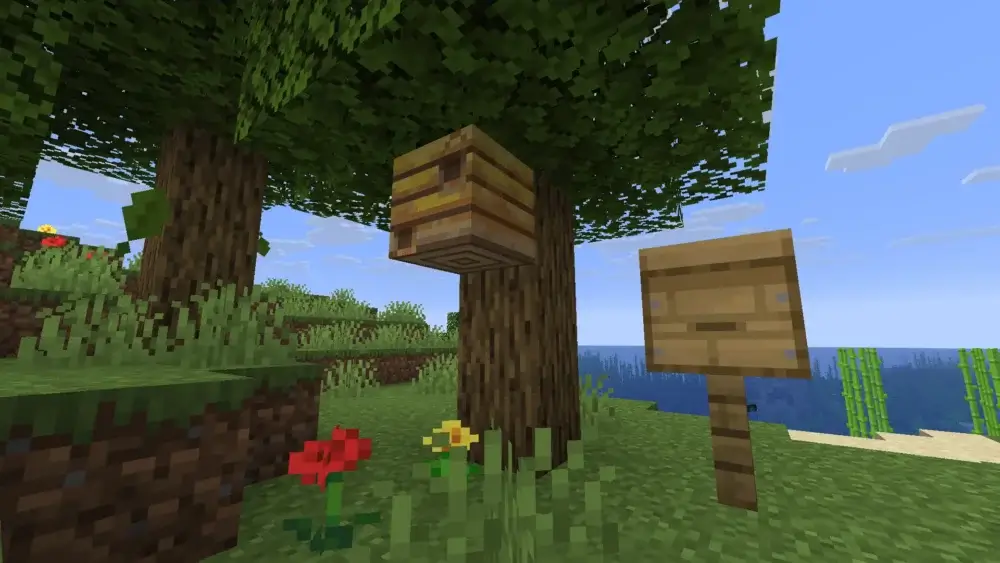
Bees and bee nests can be naturally found generated attached on certain trees: Oak, Birch, Mangrove, Cherry tree. The chance of bee nest to be generated on a tree also vary depending on the biome:
- Meadows — 100% chance for every tree generated in the biome.
- Plains, Sunflower Plains and Cherry Groves are all biomes with a high chance of finding a tree with a bee nest attached.
- Forests, Birch Forests and Mangrove Swamps have a lower chance of finding a tree with a bee nest attached, but are nonetheless are worth a try of you weren’t able to find a bee nest anywhere else.
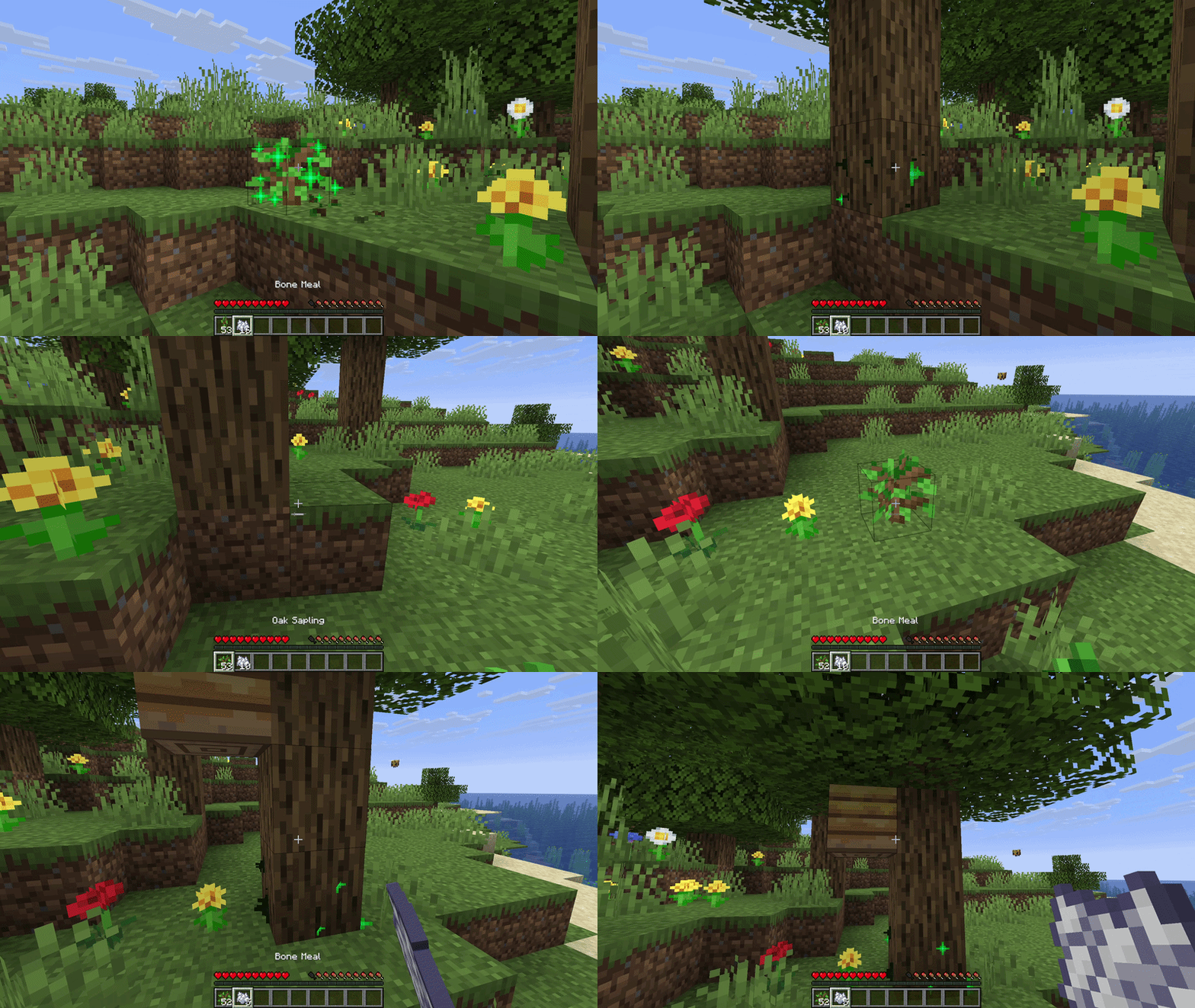
Alternatively, you can try to force the tree to have a bee nest. If you plant an Oak or Birch sapling within 2 blocks of any flower, it has 5% chance to have bee nest when grown. Bee nest itself will contain from 1 to 3 bees in this case.
Bee nest vs beehive: what is the difference?
While those 2 blocks function completely identical: same gathering mechanics, same amount of honey that can be made in there, same amount of bees that can fit in one block, same amount of item drops; There is a clear difference between the 2 blocks:
- Bee Nest: a naturally generated block found in the wild, it cannot be crafted.
- Beehive: a player-crafted block. It requires gathering honeycomb first to create, ideal for setting up a controlled farm at your base.
How honey production works
The process of making honey, while seems complicated, is actually fully automatic and doesn’t involve any actions from the player, asides from waiting and being nearby so the farm is rendered by the player and the bees actually move and do something.
The process goes as follows:
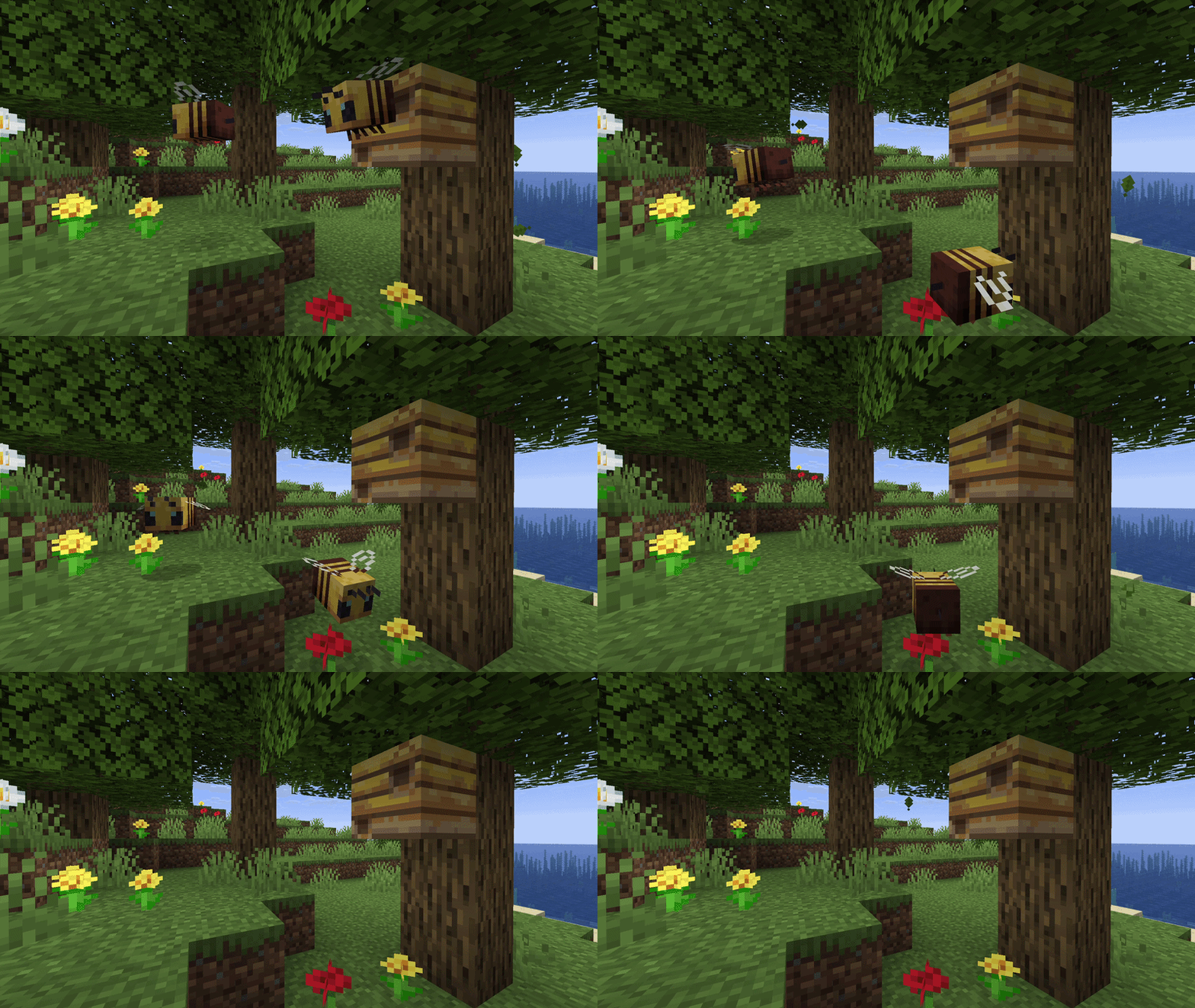
- During the day(and clear weather!), bees leave their beehive / nest to search for flowers
- Once they found them, they hover over them to collect pollen(you can even see pollen particles falling off the bee)
- Then, the pollinated bees return to the nest / beehive
- Each time the pollinated bee enters the nest / beehive the “honey level” of the block is increased by 1, with level 5 being the maximum one.
- When the the nest / beehive reaches the maximum level of honey, the block changes its texture and honey is visually dripping out of the holes in the nest / beehive. This is exactly the time, when the honey is ready to harvest!
How to get honeycombs and honey bottles safely
In the intro to the article we’ve briefly covered how to get honeycombs / honey bottles, however, to make things absolutely clear and ensure the safe gathering of these items, let’s carefully go over the process again, step by step.
Assuming you’ve waited long enough for the nest / beehive to completely fill up with the honey, follow these steps:
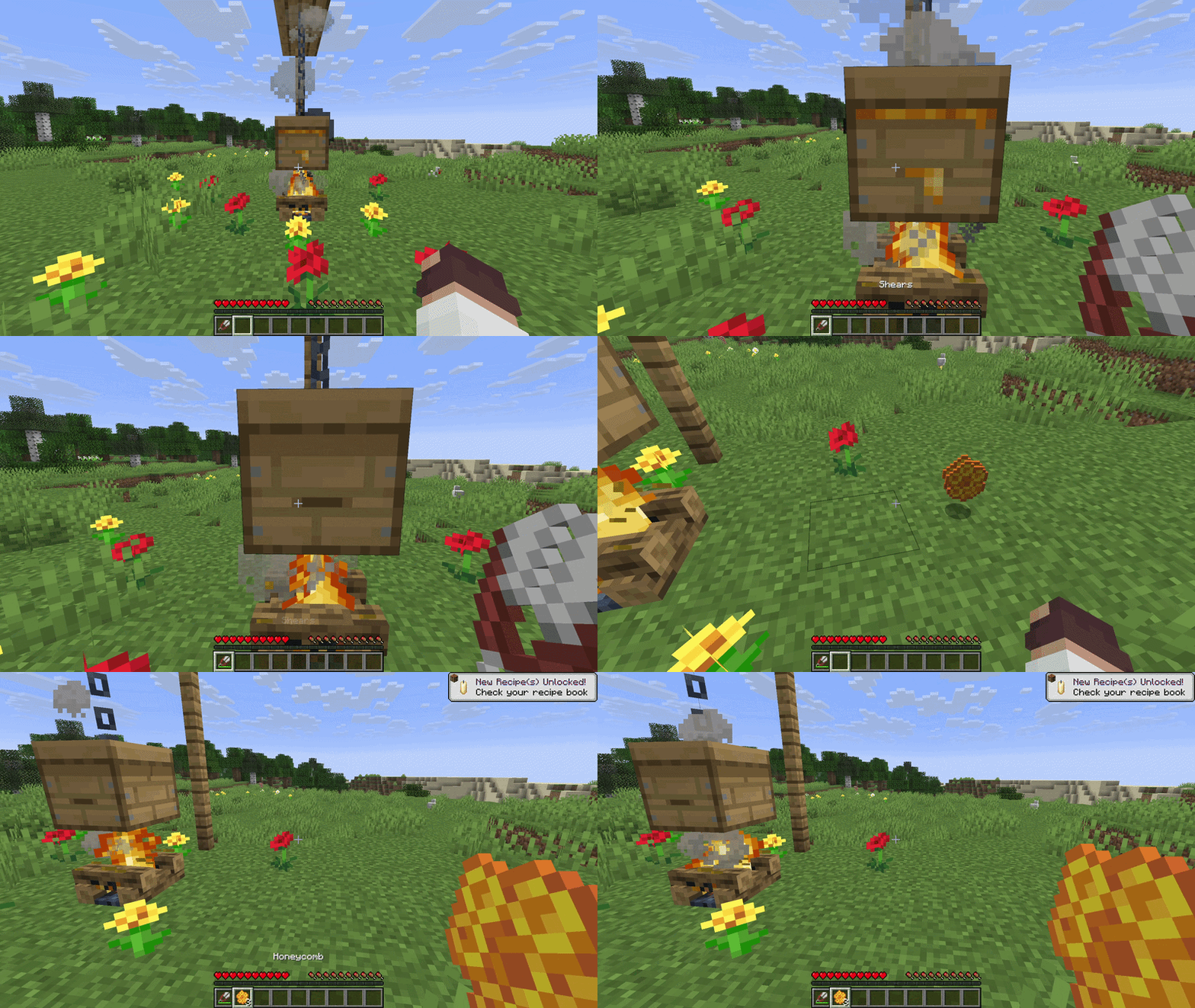
- Safety measure: Place a campfire underneath the nest / beehive and make sure it is lit. This is a crucial step, because without using this precaution, the bees will get angry and attack you after collecting honeycombs / honey.
- Equipment: To get honey combs, equip shear in your main hand. To get honey — an empty glass bottle.
- Gathering: Right click the nest / beehive with shears / glass bottle to get the desired item.
- Results: Using shears will result in dropping 3 honeycombs per nest / beehive, and using glass bottle will result in dropping 1 honey bottle per nest / beehive.
You cannot get both honeycombs and honey at the same time, as after using one of the tools to get either honeycomb or honey, the honey level of the nest / beehive will rest to 0, making it impossible to get the other item without waiting until the honey level refills.
That’s exactly how you safely gather said resources, without angering the bees and harming yourself due to them getting angry.
How to craft and use beehives
Just like we discussed earlier, beehive works in the same the bee nest does, however unlike the nest, it can be crafted by the player. The crafting recipe for the beehive is actually pretty simple, however it involves honeycombs. Hence, you will first need to gather at least 3 honeycombs — the exact amount needed for one beehive, then get 6 wood planks of any type and place all of this on the crafting table just like in the image below:
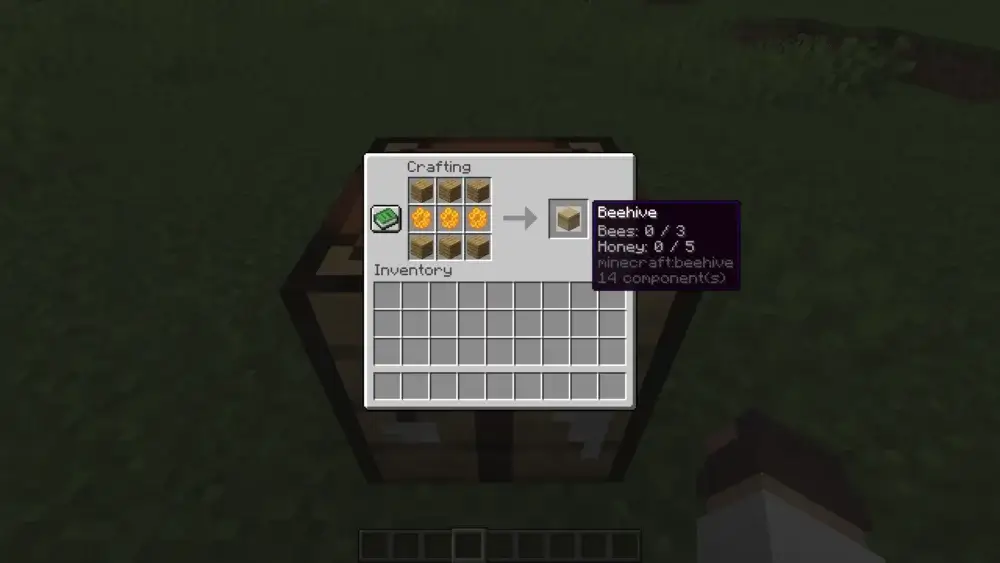
To properly use the beehive, place it near a patch of flowers. Any wandering, homeless bees will eventually adopt it as their new home. 1 beehive can house up to 3 bees at once.
How to move bees and bee nests / beehives
Moving bees and bee nests / beehives is a whole other ordeal, as just breaking the block will cause it to completely break, drop no items, and all the bees inside will swarm and attack you. this way, not only you loose the bee nest / beehive, but all the bees inside as well. So what is the proper way to move bee nests/ beehives?
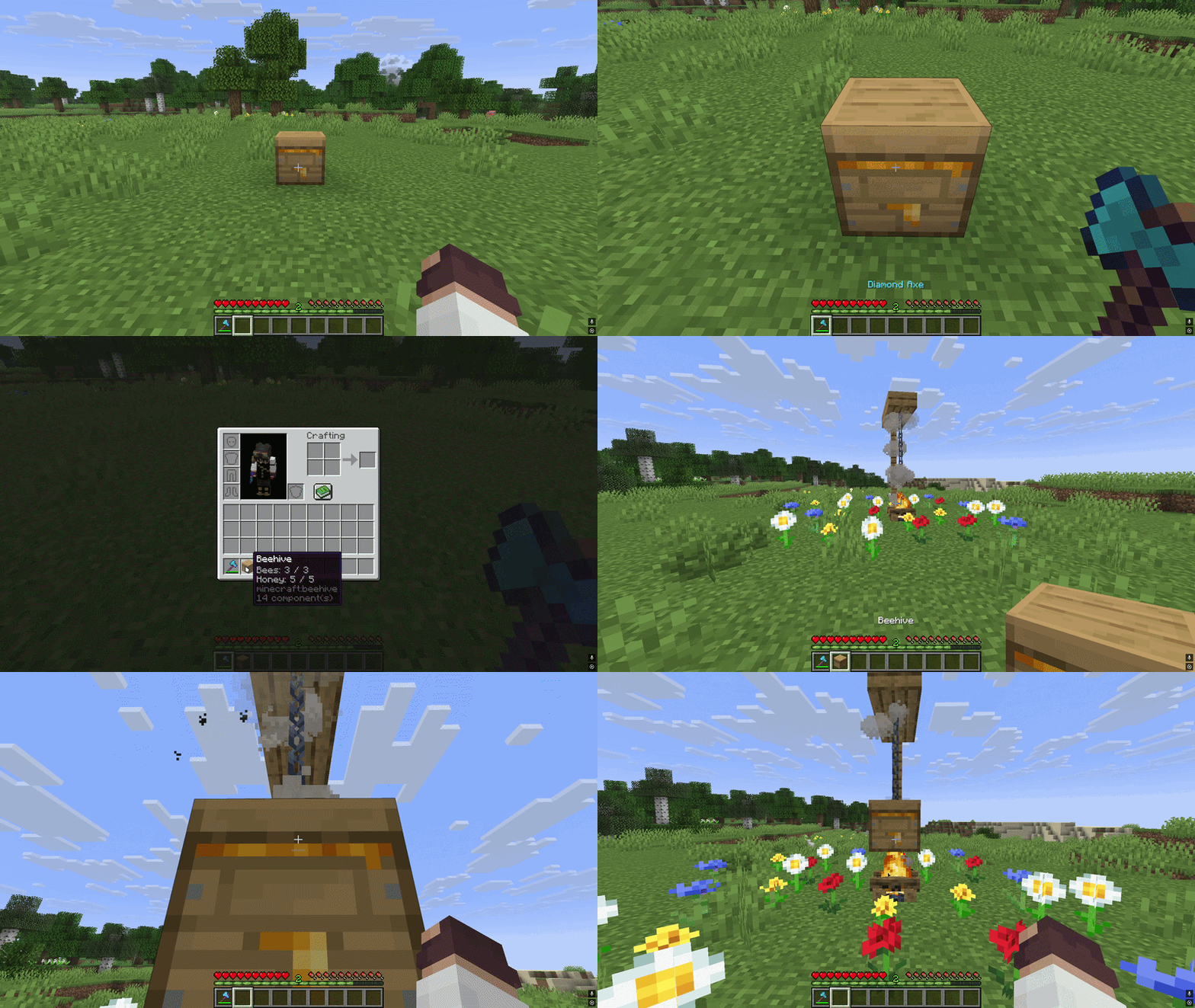
Well, for this you will need a tool(preferably axe) enchanted with Silk Touch. This enchantment makes it so that when you break the block, it drops in a perfect intact state. Once you find a place for it, you can just place it back and it will be completely fine, like nothing ever happened!
So to move bee nest / beehive in specific, get yourself a Silk Touch tool, then wait for the nightfall or rain, so all the bees will go inside the nest / beehive. Then simply break it with Silk Touch tool. The nest / beehive will be in perfect state, moreover, all the bees that went in there, are still stored inside the block you’ve broken a moment ago. This means that once you place it, the bees will just come out of it like nothing happened, allowing you to freely move your bee nests / beehives.
What honeycomb and honey bottles are used for?
Both honeycomb and honey bottles are used in many crafting recipes and ways, so let’s go over each item separately:
Honeycomb is a versatile crafting material used in many crafts, with the most common ones being:
- Beehives, just like we mentioned above.
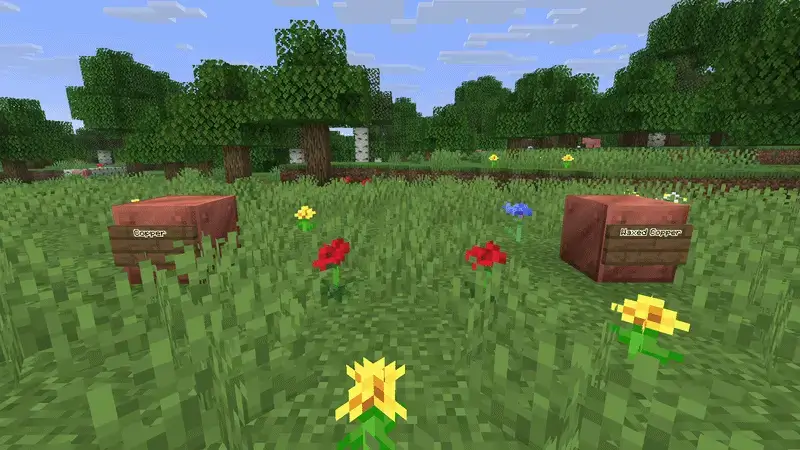
- Waxed Copper blocks: Combining honeycomb with any copper block, or interacting with already placed copper block while holding the honeycomb, creates a waxed copper block. Which means that this copper block will no longer oxidize and turn green over time.
- Candles: Great decoration block crafted with 1 honeycomb and 1 string.
- Honeycomb blocks: With 4 honeycombs placed in a 2x2 grid, a honeycomb block can be crafted as well.
Honey bottles on the other hand, while aren’t used as much in crafting, have lots of useful ways to be used:
- Curing poison: Drinking honey bottle will completely remove the poison status effect.
- Food: 1 honey bottle restores 6 hunger and 1.2 saturation.
- Honey blocks: Using 4 honey bottle you can craft a honey block by placing them in the 2x2 grid. The block is generally useful for redstone mechanisms and parkour.
- Crafting sugar: Honey bottles can be converted directly into sugar.
Unlike milk, honey bottle removes only poison effect! Other bad effects will still remain. Additionally, drinking honey bottle won’t result in removing the positive effects you have at the moment.
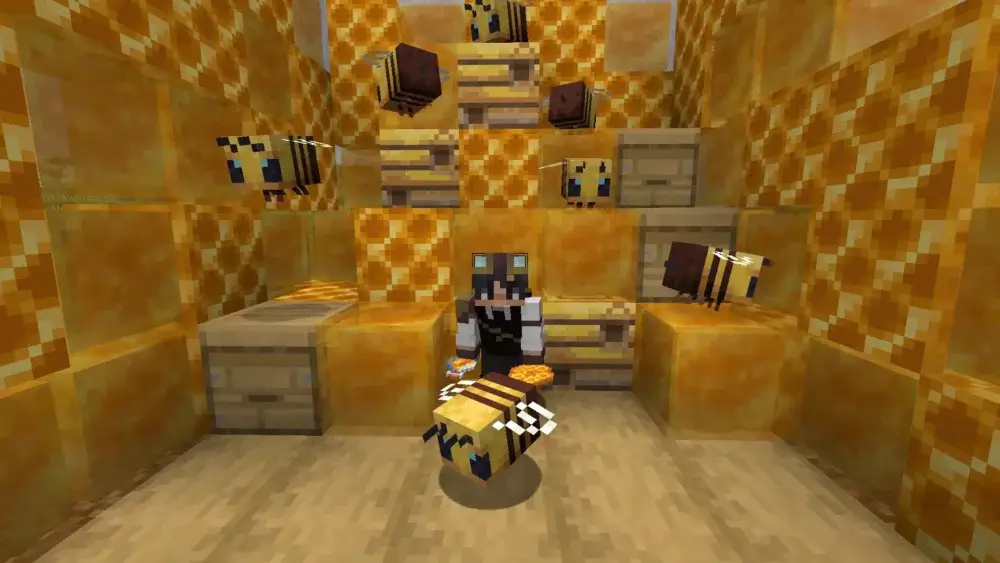
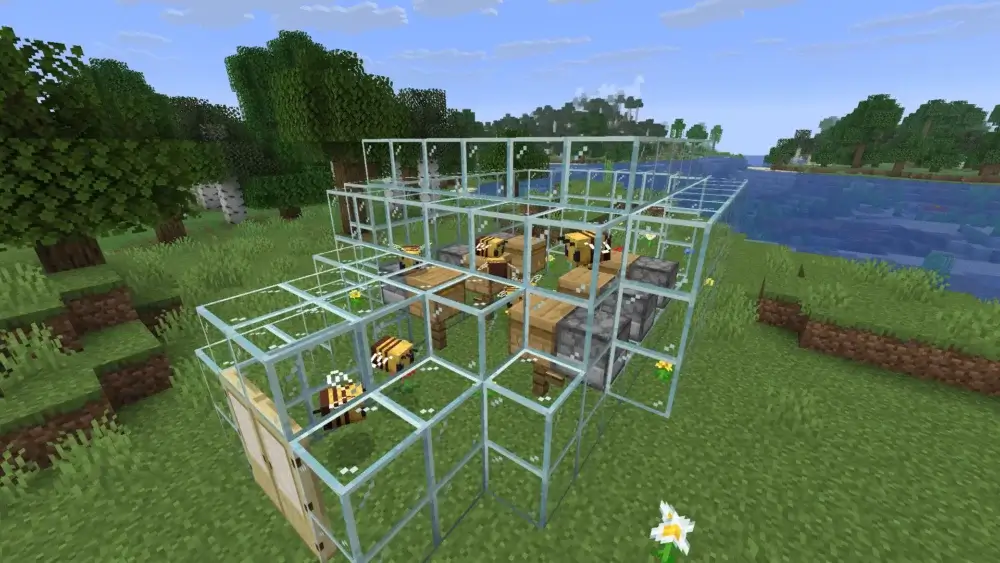
Simple honey farm
To create basic, automated bee farm setup, follow the next steps:
- Place bee nest / beehive surrounded by flowers. Close the are with glass so the bees don’t wander off too far.
- Place dispenser facing the bee nest / beehive.
- Fill the dispenser with either shears for honeycomb or empty glass bottles for honey.
- Done! Repeat with as many bee nests / beehives as necessary.
When honeycomb or honey is being gathered by dispenser, there is no need for a campfire underneath the bee nest / beehive, as the automated gather is already safe(doesn’t anger the bees) without it.
Troubleshooting: what could’ve gone wrong
| Problem |
Explanation |
Solution |
| Hive is not filling with honey. |
The bees need access to flowers. |
Ensure there is at least one flower within their line of sight. Also, check the weather / time as bees don't work at night or during the rain. |
| Bees are angry after harvesting. |
Bees are angry after harvesting, the smoke was blocked by another block, or you accidentally hit a bee. |
Run away immediately! If an angry bee stings you, it will eventually die, leaving your hive empty. Run out of range and wait for them to calm down. Once they are no longer hostile, return and place a lit campfire directly underneath the hive before harvesting again. Alternatively, use the automated harvest that doesn’t require the campfire. |
| No honeycomb / honey dropped. |
You tried to harvest before the bee nest / beehive reached honey level 5.
or
Wrong tool was used. Remember, to get honeycomb — use shears, for honey — empty glass bottle. |
Wait a bit longer. When the bee nest / beehive is ready for harvest, its texture visually changes — the honey visually drips out of it.
or
Wait for the bee nest / beehive to reach the honey level 5 again and use the right tool for harvest. |
| Bees disappeared |
Bees can wander far away, get stuck in water, or fly into fire.
or
The bees eventually(not always immediately) die if they sting the player in the heat of anger. |
Keep them enclosed in a greenhouse setup if you want to keep them safe.
or
There is nothing you can do to revive the dead bees. Find new bees for you bee nest / beehive. For the next time keep in mind that fact and be more careful not to anger bees, or at least not get stung by them, so they don’t die again. |
Conclusion
That was our comprehensive guide on bees, honeycomb, honey and bee farming. Thank you for reading until the end and we wish your bee farm to grow big and well!








 en | USD
 CHAT WITH GODLIKE TEAM